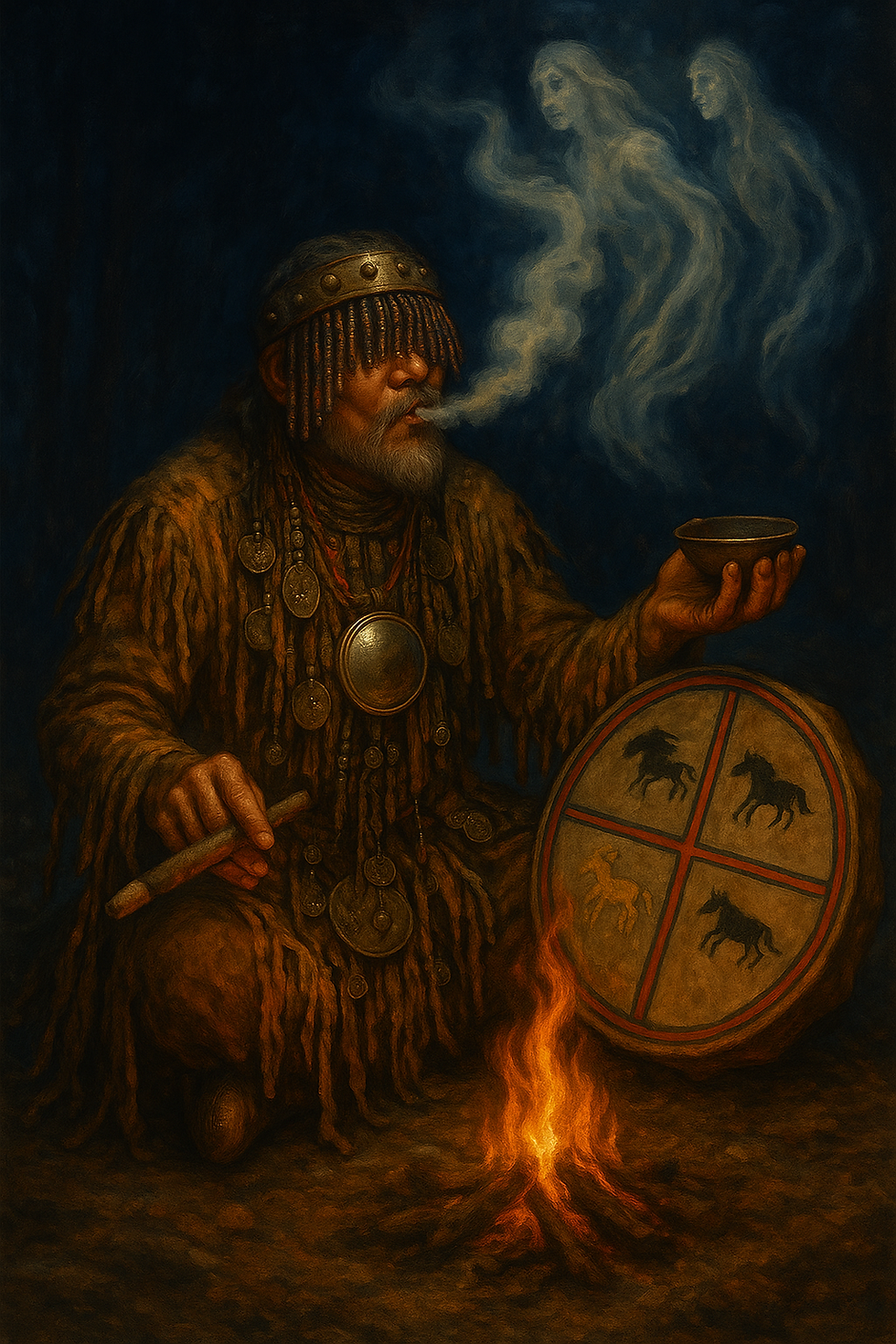
Quantum Healing and the False Spiritual Authority: How Authority Forms Without Ordeal, Lineage, or Consequence - Part 1


The modern "quantum healing" culture presents itself as inclusive, empowering, and evolutionarily advanced. However, beneath this language lies a structural void. Authority is self-proclaimed, verification relies on emotions, and error correction is optional. The system doesn't fail due to malicious individuals; it fails because its design doesn't filter out the unfit.
This isn't a metaphysical argument but a structural one. The question is simple: what prevents someone who is psychologically unstable, narcissistically driven, or poorly trained from assuming authority over vulnerable clients?
In many contemporary quantum-healing ecosystems, the answer is: very little.
Testimonials replace apprenticeship. Personal revelation replaces ordeal. Certification replaces lineage. Disagreement is reframed as a "frequency mismatch." This creates a self-sealing authority loop. Confidence becomes evidence, doubt becomes pathology, and critique becomes "low vibration."
Classical shamanism, particularly in Siberian, Mongolian, and Tungusic traditions, evolved differently. Not because it claimed superior truth, but because it embedded brakes.
Ordeal As Entry Barrier
Ethnographic records describe shamanic vocation as imposed, not chosen. In Buryat traditions documented by Sergei Shirokogoroff and later summarized by Mihály Hoppál, the future shaman often undergoes prolonged illness, psychological disorientation, or visionary crisis before recognition. These experiences are collectively interpreted, not privately. Elders assess whether the individual is experiencing a call or pathology.
Similarly, among Evenki groups, Suslov describes initiatory illness involving fragmentation visions and symbolic dismemberment before apprenticeship begins.
This ordeal acts as a filter. Individuals seeking prestige rarely volunteer for prolonged destabilization.
Modern quantum-healing systems invert this. Authority is aspirational. The more compelling the narrative, the faster recognition arrives. The ordeal disappears, along with a major psychological filter.
Apprenticeship And Correction
Among Mongolian Darkhad practitioners, apprenticeship involves years of ritual assistance, learning invocation sequences, and being corrected by elders. Mistakes aren't seen as "personal expression"; they are errors requiring adjustment. Power is mediated through lineage.
This creates friction. Friction limits inflation and forces confrontation with incompetence.
Quantum-healing certification models often eliminate this stage. Training may last days or weeks. Graduates operate independently. Peer correction is rare. Social validation replaces technical supervision.
Taboos As Behavioral Constraints
In many Siberian traditions, shamans observe taboos regarding diet, sexual conduct, and ritual timing. Ksenofontov records Yakut practitioners abstaining from specific foods and social behaviors to maintain ritual legitimacy. Violations reduce perceived authority.
The consequence isn't only social; it's cosmological and operational. Among Yakut and Evenki accounts, breaking taboos risks the withdrawal of helping spirits. The shaman isn't considered the owner of power but its temporary host. If discipline collapses, the spirits may abandon the practitioner. Some narratives recorded by Shirokogoroff and later ethnographers describe illness, misfortune, or ritual failure following taboo violations as spirit punishment.
These beliefs function structurally as powerful behavioral brakes. They tie personal conduct directly to operational capacity. Discipline isn't moralistic; it's pragmatic. If the shaman destabilizes themselves, they destabilize the relationship with the spirits.
Quantum-healing environments rarely include comparable consequences. Power is framed as inherent or self-generated. There's no equivalent mechanism where misconduct results in perceived loss of ability. Without that risk, behavioral constraints weaken.
Community Sanction
Traditional shamans operate within communities capable of withdrawing recognition. Potanin’s accounts of Altai practitioners note loss of status following repeated ritual failure. Authority is conditional.
Modern practitioners operate in fluid markets. Failure doesn't remove authority; it's reframed as "the client not ready." This eliminates negative feedback.
The Structural Pathology
The result is a triad: spiritual superiority, bypass, and commercialization.
Spiritual superiority emerges when practitioners interpret disagreement as evidence of higher consciousness. Counseling literature on spiritual bypass (John Welwood; later expanded by Masters) describes this dynamic: psychological avoidance masked as transcendence.
Bypass removes self-critique. Narcissism research on charismatic leadership (Rosenthal & Pittinsky; Post) shows that environments lacking accountability amplify grandiosity.
Commercialization reinforces both. Market incentives reward certainty and identity branding. Hesitation reduces sales. Inflation becomes adaptive.
Anomalous experience literature also documents risk. Studies on regression and suggestibility (Lynn, Lilienfeld) show how authority figures can unintentionally shape client narratives, creating false memories.
Medical outcomes research on alternative medicine usage (Johnson et al., JNCI, 2018) indicates that reliance on alternative-only pathways correlates with delayed treatment and increased mortality in some cases. The issue isn't modality itself, but authority structures discouraging critical evaluation.
Structural Comparison
Classical shamanism builds friction into the formation of authority. Recognition follows ordeal. Independence follows apprenticeship. Behavior is regulated through taboos. Legitimacy can be withdrawn by the community. Power is conditional and must be continually maintained.
In classical shamanism, the relationship to power is not only conditional but procedural. Results depend on correct timing, proper ritual sequencing, and adherence to established methods. Among Siberian and Mongolian traditions, rituals are tied to seasonal cycles, lunar phases, territorial permissions, and specific offerings appropriate to the spirits involved. Ethnographic accounts from researchers such as Sergei Shirokogoroff, Uno Harva, and Mihály Hoppál describe ceremonies where incorrect timing or improper procedure was believed to reduce efficacy or even produce adverse outcomes. The implication is structural: power isn't continuously available. It must be engaged under the right conditions.
This contrasts with many quantum-healing models, where energy is described as constantly accessible and responsive to intention alone. Without requirements for timing, ritual precision, or procedural correctness, intervention becomes independent of context. The absence of these constraints removes another layer of regulation. In classical systems, failure can be attributed to incorrect timing or method, prompting correction. In energy-based models, outcomes are often explained through subjective alignment, which reinforces self-regulation and reduces external checks.
Quantum-healing structures tend to remove these constraints. Authority often begins with self-declaration. Training is brief. Behavioral limits are minimal. Legitimacy travels with branding rather than community. Once claimed, authority is rarely reduced.
This isn't a philosophical difference. It's a structural one.
Classical shamanism assumes power is dangerous. It must be constrained, tested, and revocable. Quantum-healing culture often assumes power is inherently benevolent. It's treated as something to distribute and expand.
One model filters who can hold authority. The other allows authority to multiply.
When vulnerable individuals seek help, that structural difference determines whether guidance comes from someone who has been tested and constrained, or from someone whose authority was never required to pass through those filters.
Conclusion
Classical shamanism assumes power is dangerous. So it slows you down, tests you, humiliates you, and if necessary, removes you. Authority is conditional. Discipline is enforced. Timing matters. Procedure matters. You don’t own power. You borrow it, and it can be taken back.
Quantum-healing culture assumes energy is harmless and universally available. So authority becomes self-assigned, training becomes brief, and correction becomes optional. If nothing can withdraw your “energy,” nothing can restrain your inflation either. The system quietly selects for confidence over competence.
Classical shamanism built barriers because it distrusted human ego. Modern quantum healing removes them because it markets to it.
One system asks, “Should this person hold power?” The other asks, “Would you like a certificate?”